IAM Canada – SkyCharter Client Care Specialists Ratify Their First Collective Agreement

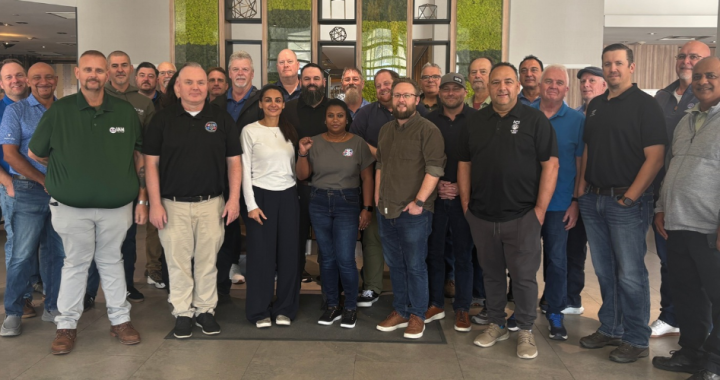
A major milestone has been reached for the Client Care Specialists (CCS) at SkyCharter FBO in Toronto, who have ratified their first-ever Collective Agreement with the IAM Union.

On November 4, 2025, the Canada Industrial Relations Board (CIRB) certified the IAM Union as the bargaining representative for the CCS. After exhausting the conciliation and mediation processes and securing a strong strike mandate from members, the IAM Union and SkyCharter reached a tentative agreement that was ratified unanimously by the membership.

The new three-year Collective Agreement is retroactive to the date of certification and delivers significant gains for members. Those employed at the time of certification will receive retroactive pay, while the agreement also establishes annual wage increases, an important improvement for workers who had not previously received guaranteed annual increases from the employer. Members will also receive a $350 signing bonus.

The agreement includes important improvements to wages, benefits, scheduling and working conditions, including:
• Improved bereavement leave, with five paid days following the death of a spouse or child, up from three.
• Compensation for interrupted lunch breaks at 1.5 times the regular rate.
• Overtime at 1.5 times the regular rate for all overtime hours.
• Guaranteed four hours of overtime when employees are called in to work, up from three.
• A new 40-hour overtime bank.
• Additional statutory holidays, including Family Day and employees’ birthdays.
• Jury duty pay with no maximum.
• Ten paid medical/sick days provided each year on April 1.
• The ability to use single vacation days.
• Protections against contracting out bargaining unit work.
• A $2-per-hour Lead Hand premium.

This first Collective Agreement is a significant achievement for the CCS at SkyCharter FBO. It demonstrates the power of workers coming together, standing united and negotiating collectively for better wages, benefits and working conditions.

IAM Union Canada Statement on the Government of Canada’s Decision to Walk Away from Canada-U.S. Trade Deal

David Chartrand, Canadian General Vice-President of the IAM Union Canada, issued the following statement regarding the suspension of Canada-U.S. trade negotiations:

The federal government was right to end the talks and bring our negotiators home, because what was on the table would have locked in tariffs that serve no purpose other than leverage while requiring Canada to give up decisions that properly belong to Canadians. An agreement on those terms would have cost this country far more over the next decade than the fight we have now entered.

Our members build and maintain aircraft, move passengers and freight, and work across manufacturing and defence, which places them directly in the path of what is coming. Components in aerospace cross the border several times before an aircraft is finished, so a charge of this size does not land once and stop, it stacks up at every stage and reaches every worker along that chain. These tariffs are not paid by the people who designed them, they are paid by the workers whose hours get cut, by families already managing higher costs, and by communities that were built around a single plant or a single hangar.

There is a second cost that gets far less attention, and it is the uncertainty itself. A company deciding today where to place an aerospace or defence program is making a commitment that will last fifteen or twenty years, and when American trade policy shifts every few weeks, that work goes wherever the ground is more stable. Once a program leaves this country, it does not return within a business cycle.

We support the federal government’s decision to answer these measures in kind, but countermeasures on their own are not a plan for the people affected by them. Employment Insurance has to be easier to reach and it has to last long enough to carry workers through a disruption of this length, work-sharing and wage supports need to be expanded before temporary slowdowns turn into permanent layoffs, and any assistance flowing to employers should carry firm conditions that keep jobs and production in this country. This is also the moment to put federal procurement and defence spending to work at home, with guaranteed industrial benefits and with maintenance and overhaul performed by Canadian workers rather than sent south of the border.

The federal government cannot carry this alone. Provinces hold the levers that decide whether a targeted employer stays open through a difficult period, from payroll relief to training funds and the conditions attached to their own procurement, and they should be using them now rather than waiting to see how long this lasts. Aerospace and manufacturing work is concentrated in a small number of communities, and when a plant closes, it takes the supplier network around it down as well. Every level of government has a part in this, and workers will judge all of them on whether help arrives while jobs can still be saved.

Our members are prepared for a difficult period ahead, and we expect a response that measures up to what they are being asked to carry. The IAM will keep making that case to the federal government until it does.